


It can be difficult to identify the factors influencing Donald Trump one month after the US and Israel's campaign of military action on Iran.
However, it remains evident he has a keen focus on the oil markets.
A word – or online message – from the American leader about his plans used to trigger big moves in prices, as investors reacted to signs the conflict could escalate or de-escalate.
However, in the past few days, investors are showing signs of becoming increasingly doubtful about the impact of his pronouncements.
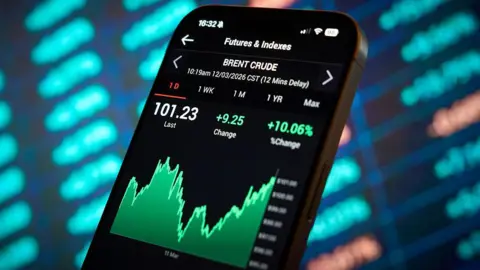
The price of oil was trading at around $72 a barrel (bbl) before 28 February, when the strikes on Iran started.
The week prior, it reached a high of $118 a barrel on 19 March and by Friday afternoon was valued at slightly under $112 – markedly higher than its pre-war price.
Below are some moments from the recent weeks where Trump and the financial markets seem to have reacted to one another – with mixed results.
Navigate with the arrow to proceed to the next slide.
"Oil prices have become a proxy for wider political and financial uncertainties, jumping when Trump's rhetoric becomes aggressive and easing when his comments de-escalates," observes one market analyst.
He adds that financial markets are appropriately reactive to those cues, due to the significant economic risks that are associated with rising oil prices.
"Investors are trying to evaluate real uncertainty," he comments. "The markets can look jumpy or confused, but what they're really attempting is managing geopolitical risk in live, with oil positioned directly at the core of that."
However, it can be tough for investors to figure out how to trade, given that some of Trump's remarks appear designed to influencing oil prices, rather than articulating policy, argues another investment advisor.
"As they say, the initial victim of war is truth," he says. "My belief is some of the rhetoric back-and-forth around diplomatic progress, and the opposite, very much are centred around just influencing the market price of oil."
Investor Response Become Increasingly Tempered
On a recent Thursday, moments after US equity markets recorded their largest decline since the outset of the Iran war, Trump stated negotiations with Iran were going "very well" and he was postponing military strikes on Iran's oil facilities until at least 6 April.
But, the oil price proceeded to climb.
One currency strategist explains that investor responses are "showing less volatility" because of the "wide divergence" between Trump's optimistic statements and the lack of confirmation from Tehran.
"Considering the optics, many market watchers do not foresee an early conclusion to the hostilities and financial markets continue to be apprehensive."
Another investment director notes investors have also become accustomed to Trump "repeatedly changing tack at hints of geopolitical, stock market or financial stress".
"We are seeing a degree of wariness, or even frank cynicism, taking hold at the fringes," he adds.


